
"There is an international scourge attacking the Jewish
People: this is the widespread addiction of men to pornography. This scourge
threatens to tear apart the fabric of Jewish life. This addiction has spared
no class of Jews: from teenagers to kollel members, from office workers to
rabbis, and from single to married men. "Guard Your Eyes" has successfully
helped to wean hundreds, if not thousands, from pornographic addiction.
"Guard Your Eyes" is worthy of the encouragement and financial support of
every Jew."
Rav Aharon Feldman, Member of the Mo’etzes Gedolei HaTorah of America
 "I doubt that at any time in our history has there been as
grave a threat to the morality of our people and to the stability of the
Jewish family as the plague of addiction to internet pornography. It has
ruined more marriages than anything. It has ruined families. It's
been terribly destructive. The "Guard Your Eyes" website is saving lives and
families. Much more can be done to extend this invaluable program, but
support is necessary to allow its continuing function and expansion.
Supporting this life-saving cause is a great mitzvah."
"I doubt that at any time in our history has there been as
grave a threat to the morality of our people and to the stability of the
Jewish family as the plague of addiction to internet pornography. It has
ruined more marriages than anything. It has ruined families. It's
been terribly destructive. The "Guard Your Eyes" website is saving lives and
families. Much more can be done to extend this invaluable program, but
support is necessary to allow its continuing function and expansion.
Supporting this life-saving cause is a great mitzvah."
Rabbi Abraham J. Twersky, MD
(Click
here to listen to a short 4 min. audio clip from Rabbi Twerski)

"I'm quite aware of what's going on in Klal Yisrael; and I
will still say, that this is the single, biggest problem facing us today -
bar none. It's completely out of control. Not a week goes by that I don’t
have to deal with a Shalom Bayis Problem or a problem in Chinuch Habanim or
Banos, or a very fine Bochur who will call me up – or at least what is
left of a very fine bochur – calls me up crying, begging for help. There
is nobody that can claim that either they’re not affected, or a family
member, or a neighbor, or the chaver sitting next to them in shul, or the
chavrusah sitting across from them in yeshiva. If you discounted it until
now, you’re gonna have to take my word for it when I say that there is no
single problem facing the yechidim in klal Yisrael and communities at large,
there is no bigger problem than this. There’s a Chov Kadosh to do something
now before there’s no semblance of Kedusha left in Klal Yisrael. And I don’t
say that lightly. Keep in mind, the people who come to me are so frum and so
upset about what’s going on, that they’re willing to talk to their Rav. That
means that there are thousands of people who would never even speak to their
Rav. I hate to sound pessimistic – but if you have unrestricted internet in
the house – internet that is not both filtered and reported, I
would say there’s a higher than then 90% chance that people have already
been Nichshal in your house. And if it hasn’t happened yet, there’s more
than 90% chance it will happen. And if it’s not happening at home, it’s
happening in the office."
Rav Yosef Veiner, Agudas Yisrael Flatbush
(Click
here to listen to a short 4 min. audio clip from Rav Yosef Veiner)
Rabbi Yehoshua Shapira
(taken from this article at
Arutz 7)
Rabbi Yehoshua Shapira, Dean of the prestigious Ramat Gan Yeshiva, maintains that the temptation
is so great to look at forbidden material that a person should not sit down
at a computer alone.
"Being open-minded and on the cutting edge of technology has a certain
value," admits Rabbi Shapira. "But let's be honest: would anyone bring a
prostitute into his home to tutor his children even if she were a talented
math teacher?"
Rabbi Shapira recommends avoiding the internet except 1) for work and 2)
with a content filter installed. "And like the laws of yichud, never use
the internet while alone in the room," he adds.
Click here for a powerful article from
the Mishpacha Magazine, Feb 2010, where they interviewed Dr. Phillip
Rosenthal about the dangers of the internet and practical solutions. (Our
work is mentioned in this article as well).

"You have no idea as to
what category of people have fallen victim to internet pornography. We would
not think that these type of people would be capable of it. Hopefully nobody
who’s a Yirei Shamayim is going to go look for that kind of trash and that
kind of filth. However, it is perfectly possible that while monkeying around
with the internet, you hit a button and there’s a pop-up of a pornography
scene. You weren’t looking for it, but it happened. You have exactly 3/10ths
of a second to turn it off. And if you avoid it for 4/10ths of a second, you
may become addicted. That’s how severe it is. It's one of the most powerful
addictions. Day after day after day - I get letters and calls from people
who say, "what can I do to save myself?" because they have fallen into the
pornography addiction and it has taken them all the way down. It has ruined
more marriages than anything, ruined families. It's been terribly
destructive."
Rabbi
Abraham J. Twersky, MD

The renowned
Rabbinic leader Rav Shmuel HaLevy Vozner issued a Jewish
legal ruling forbidding males to surf the internet in a room alone (without
a fool-proof filter).
Rabbi Elisha Aviner
Rabbi Elisha Aviner,
one of Israel’s foremost authorities on high-school education, gives
lectures to parents and teachers all around the country. “There is
absolutely no excuse not to have an internet surfing filter on one’s home
computer,” he tells parents. “Not to do so is to violate the
commandment, “Thou shall not put a stumbling block in front of a blind man.”
Beitar
Ilit, one of the most ultra-Orthodox cities in the world,
bans open internet use claiming that
“Fifty percent of the problems in the city – sholom bayis and chinuch
habonim – stem from the Internet. There is a hidden blaze in the city.
An atom bomb underneath the city". If
this can be said of Betar, how much more so this must be true in less
religiously strict cities!
Internet Warning at Yeshiva Darchei Torah
May 14, 2008
From
www.theyeshivaworld.com (Click
here for the full Article)
A warning about the dangers
of unfettered access to the Internet through computers and cellular phones
was delivered to hundreds of Yeshiva Darchei Torah parents Monday night by
Rabbi Yaakov Bender Shlita, the Rosh Hayeshiva.
The yeshiva is not known for
shying away from modern educational tools and methods - and is even notable
for the businesslike manner in which it conducts activities such as large
meetings and fundraising - but Rabbi Bender used an uncharacteristically
lengthy hour-long address to deliver a firmly anti-Internet message.
He went so far as to say that
no home ought to have Internet access without the approval and guidance of
one’s rav or rebbe.
That would appear to echo a
no-Internet policy introduced in Lakewood, N.J.’s yeshiva community several
years ago.
No specific incident
precipitated Rabbi Bender’s remarks, Mr. Benoliel said, though he did relate
a few horror stories during his speech.
In bringing up what he
considers to be a very serious problem, he “stated that the dangers inherent
in modern technology may be the greatest threat faced by the Jewish People
in its history,”. Rabbi Bender was prepared with suggested solutions.
Technical experts were on hand, and literature was available to advise
parents about Internet filters and even “kosher phones” in which all
features are disabled except telephone service and voicemail. No text
messaging; no Internet access.
Yeshiva administrators spent
days making phone calls urging parents to attend. In the end, 600 people
showed up, a very good turnout.

Click
here to see what the renowned Rabbi
Twerski has to say on internet addiction.

Tzvi Fishman, founder of JewishSexuality.com
“The problem of pornography on the Internet caught everyone by surprise,”
Fishman maintains. “Especially among the modern Orthodox Jews in America and
the religious-Zionist community in Israel where computers with Internet are
a fixture in a majority of homes. Gradually, parents were shocked to
discover what their children were viewing while they were away. And plenty
of religious kids have discovered long lists of adult sites in their
father’s viewing history.”
Tzvi Fishman adds that his site's
Forum receives lots of frightening true
confessions, along with appeals for advice on how to overcome the urge. “The
addiction to Internet pornography leads people into a lifestyle of lying and
deception,” he says. “Many people are riddled with guilt, but don’t know how
to stop. Young boys describe how they have become loners, trapped in the web
of their terrible secret, and husbands write how their addiction has
destroyed their relationships with their wives.”
“But if a person truly wants to stop, he or she can,” Fishman asserts. “Just
as Alcoholics Anonymous and Gamblers Anonymous have long records of success,
we hope to have the same success at
Pornoholics Anonymous too.”
Belzer
Rebbe Shlita: Kosher Internet Only for Those who
Must be Online
YWN Israel

June 10, 2008
The Belzer Rebbe Shlita on
motzei Shavuos addressed his chassidim in the
Grand Yerushalayim Beis Medrash, telling them
that we are now in the time of “Kimu V’Kiblu”
and as such, we must realize the Internet brings
many “nisyanos” (challenges) to us and for those
requiring connectivity to earn a livelihood,
must opt for one of the kosher options available
today – to distance oneself from the “open
internet” and all the threats associated with
it.Addressing the
khal following havdalah, a proclamation was made
public, signed by all members of the Machzikei
Hadas Beis Din, referring to the need to limit
dangers as per the Rebbe Shlita, and to continue
efforts in tandem with the Rabbinical
Communications Committee which oversees kosher
cellular telephones towards providing kosher
internet to those whose lives demand
connectivity.
A new system with a higher
filtering ability is running in pilot mode to
meet the needs of those who must be connected or
use email, adding the Badatz is aware that the
success of filtered systems to date depends
greatly on the cooperation of an end-user,
stressing the many dangers associated with
Internet access. The rabbanim Shlita are not
giving a blanket ‘hechsher’ to Internet use,
explaining they are aware one cannot be
‘me’taher es ha’sheretz’ (purify the
contaminated) and therefore, there is no blanket
approval regarding Internet use, even filtered
as it may be.
In another publication
released by the Machzikei Hadas Beis Din,
reference is made to those who “have no
alternative” and must be connected to the
Internet to earn a livelihood – urging them to
change over to the new pilot filtered system
which limits risks to exposure to to’eva. The
badatz notice is also addressing those who just
use email.
|
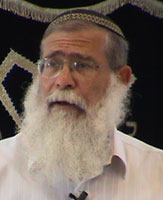
Click
here for an article from
Rabbi Elyakim Levanon, Rabbi of Elon Moreh on breaking
free of internet pornography addiction.